NOLAN THOMPSON

Timeline & Role
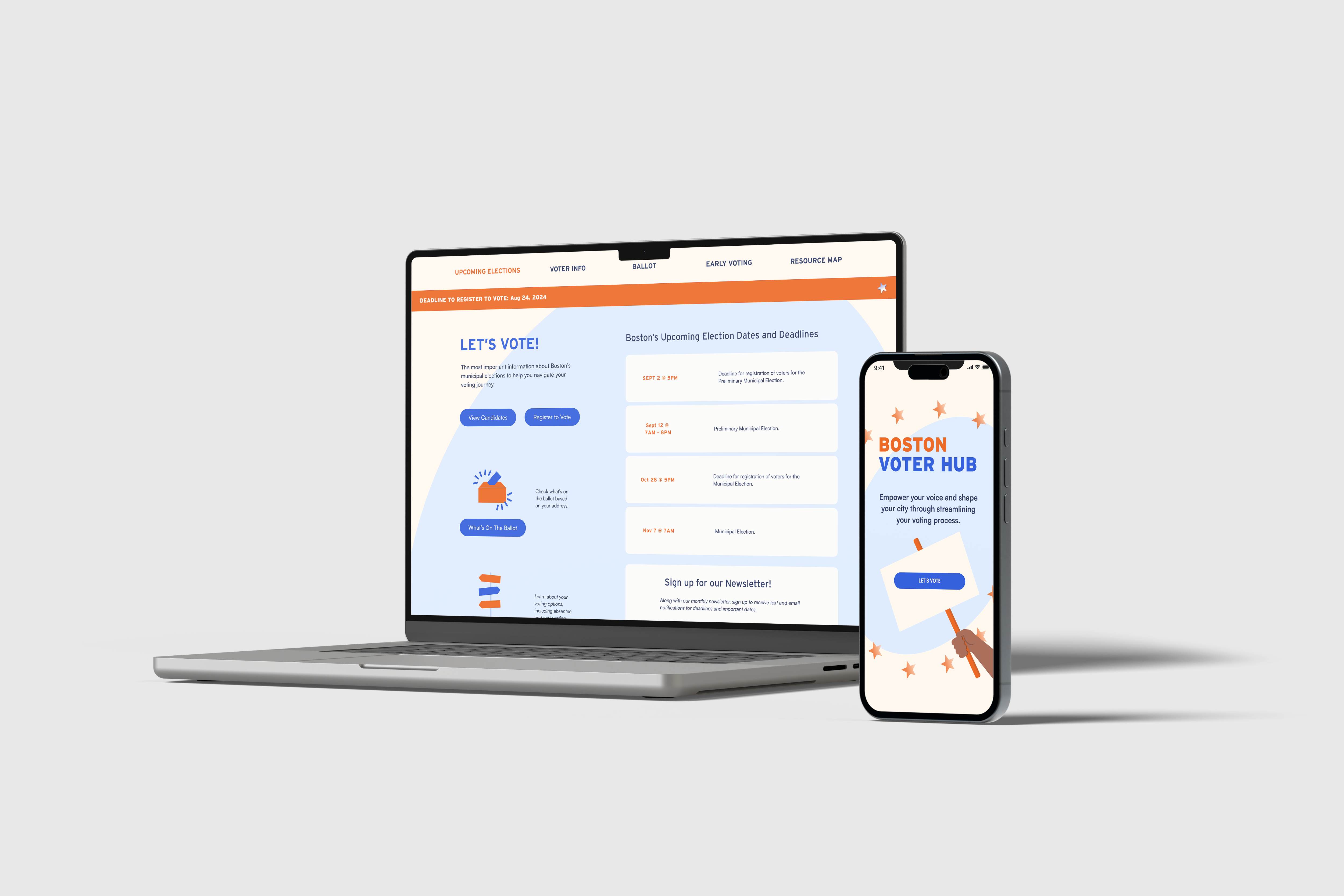
Boston Voter Hub is a civic engagement platform designed to increase voter turnout in local elections across Boston neighborhoods. The platform provides users with personalized information about upcoming elections, candidates, and voting locations, making it easier for citizens to participate in the democratic process.
Spring 2024
As the lead UX designer, I conducted deep community-based research and designed the visual identity and MVP prototype. I worked closely with actvists and leaders in the Boston area, specifically Yawu Miller, ex-senior editor of the Bay State Banner and current founder of The Flipside.
Fall 2025
Transitioned to frontend development and data visualization work, polishing the platform's UI directly in the codebase. I then lead co-research initiatives between two clients with similar missions, The Greater Boston News Bureau and the Urban League of Eastern Massachusetts, using data and psychology to up-level the impact of these intertwined initiatives.
Summer 2025
Another transition to product owner, I guided design and software teams to officially launch the platform to the public. Through leading the team, we continued to make thoughtful iterations on features, data sources, and UI.
Design Strategy & Visual Identity
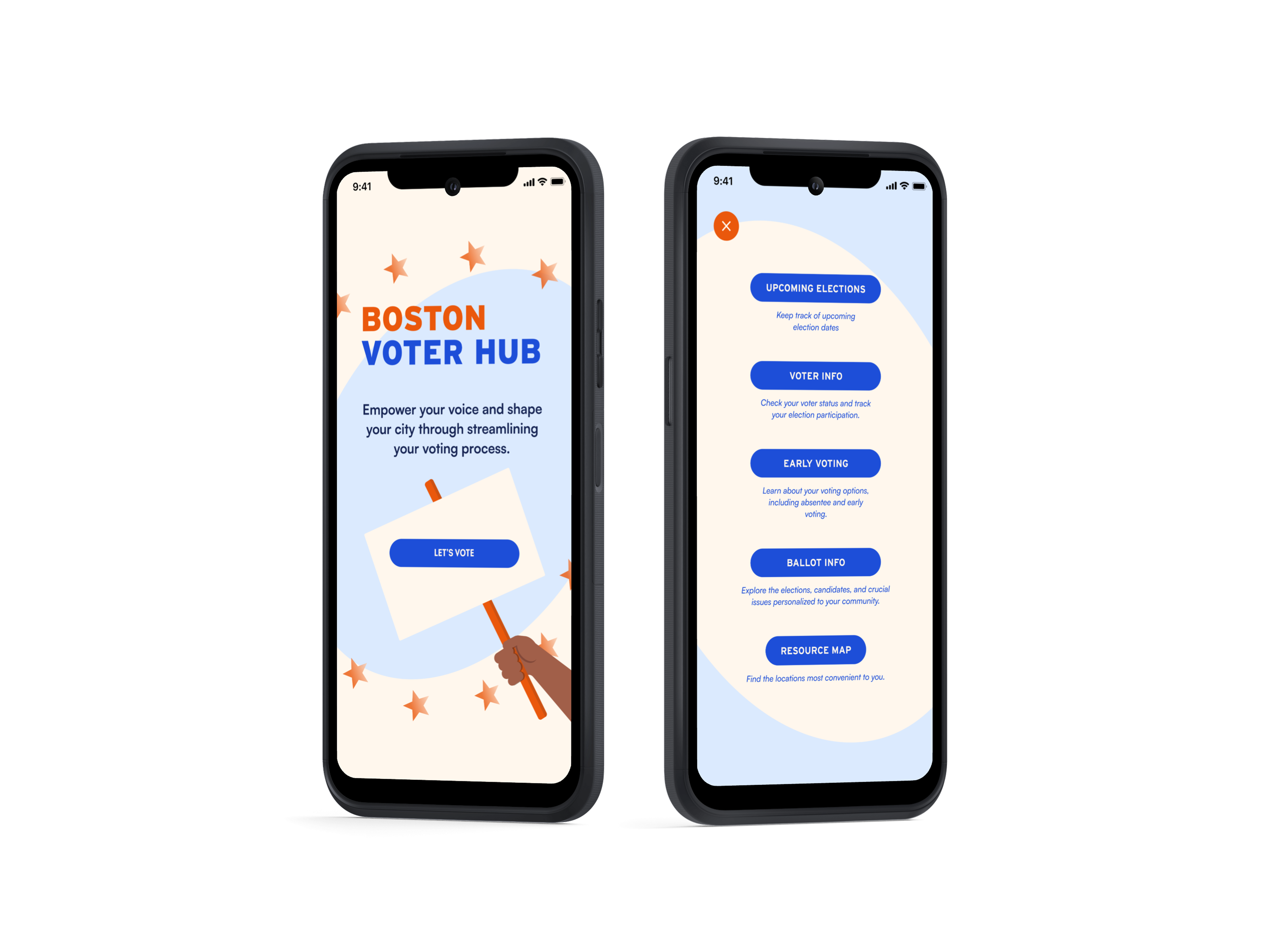
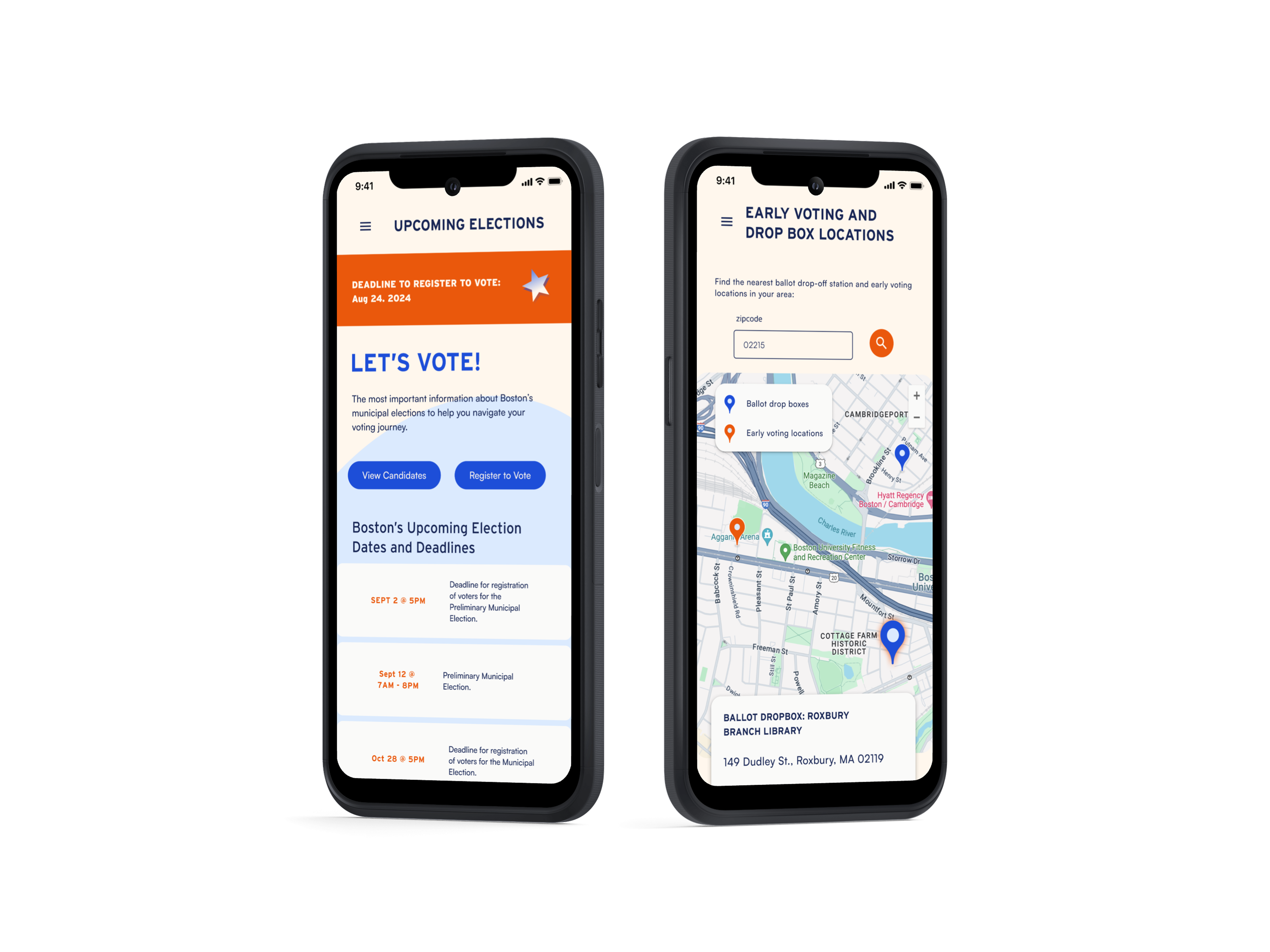
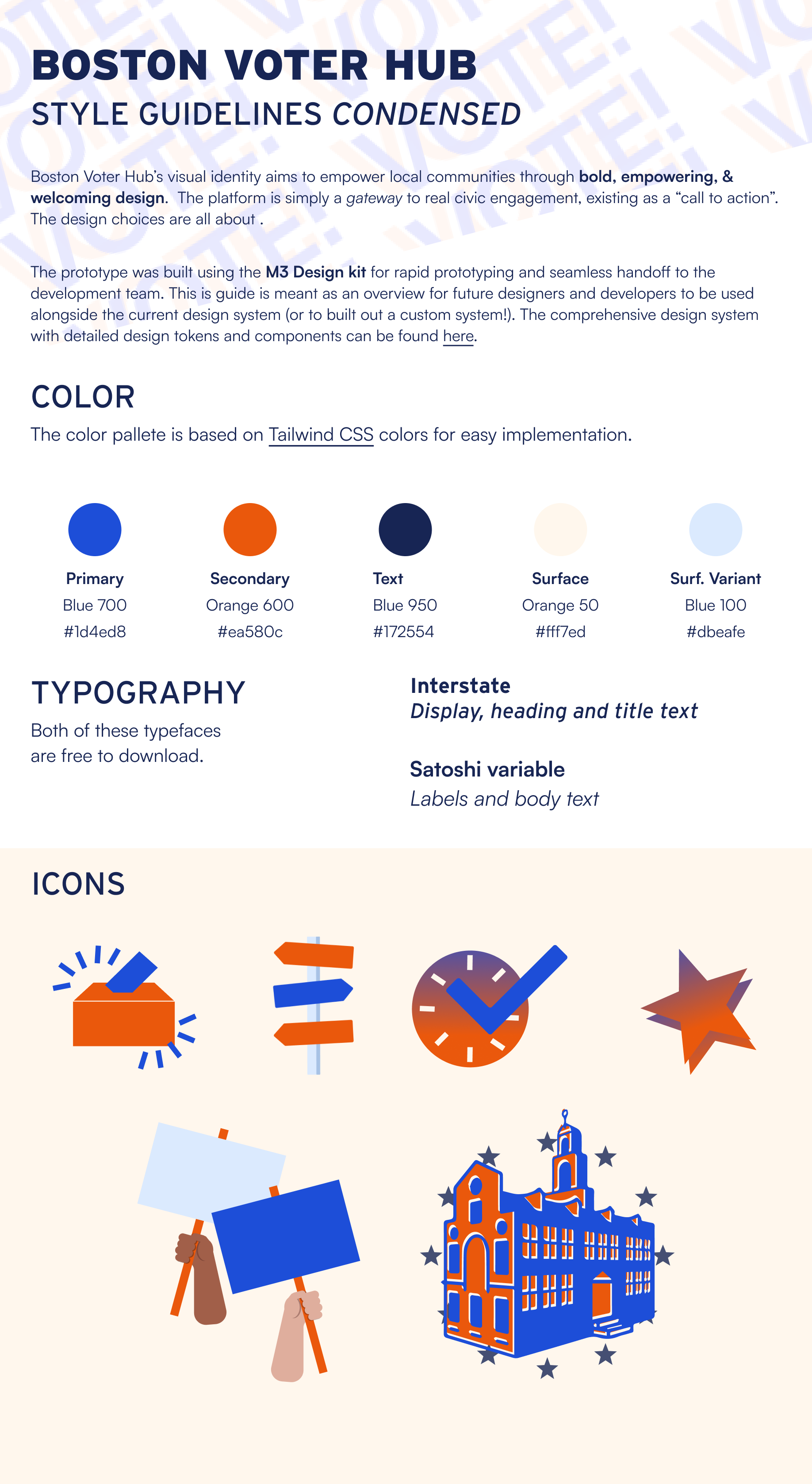
The issue's faced around accessing election information come from a lack of accessibility on many fronts. On the experience side, election info, especially at the local level, lacks centrality. On the interface side, fancy jargon can feel off-putting to the average person, deterring them from engaging in the democratic process. Our design strategy focused on creating a friendly, trustworthy, and easy-to-navigate-for-all visual identity that resonates with Boston's diverse communities. I aimed to simplify complex information through intuitive navigation, clear typographic hierarchies, and an apolitical color palette to be welcoming to all.
Design Insights
This initiative taught me the importance of not just visual accessibility, but strategic copy. We realized heavily on the concept of plain text design, especially when thinking about bilingual communities to soften political jargon and make the digital space much more welcoming. Our own interns engaging in this project faced huge struggles trying to understand the voting process themselves. Small nuances like all municipal government is local government, but not all local government is municipal government, proved to be sizable blockers in team and user understanding. This struggle uncovered again and again how important strategic accessibility, simplicity, and clarity is when designing for civic technology.
Research Highlights
User Personas
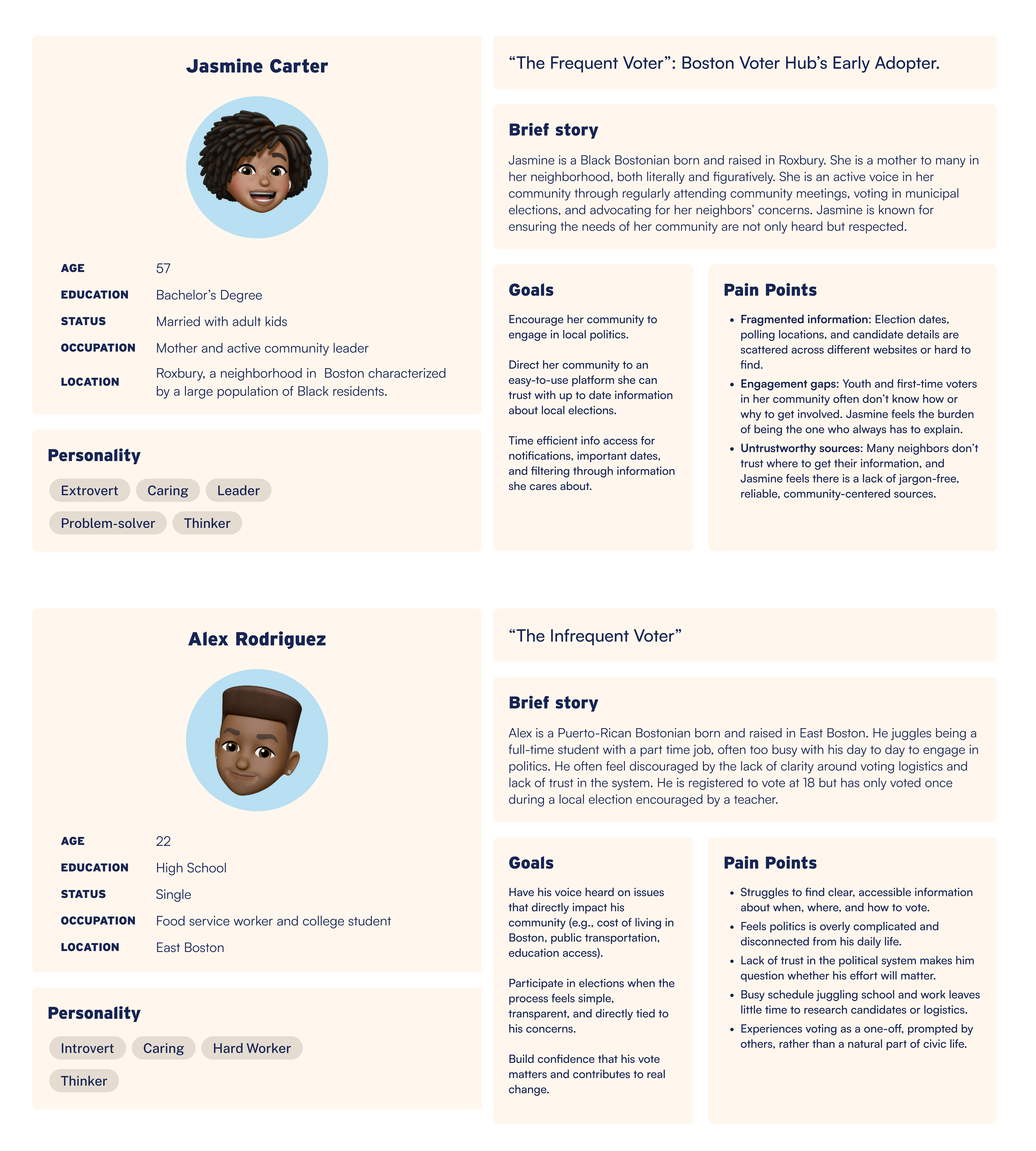
Through surveys, one-on-one interviews, and participatory workshops with local Bostonians, our team crafted user personas based on two categories: the frequent voter and the infrequent voter. Our main goal is to get the infrequent voter out to the polls, but we need the frequent voter, who is often a community leader, to engage them. It was imperative we build a platform local community leaders can trust to advocate for the less civically engaged to adopt it as well.
Through this community engagement with real local leaders and activists, who had trust and touch points with areas we wanted to target the most, we got key insights that surprised us. Mainly that younger generations were not showing up to vote in local elections but the older generations were, which altered how we tailored our user personas, and ultimately our interface. Through conversations and census data, we discovered the older gen already had established habits and sources, but the younger gen needed something that aligned with their values and lifestyle. We had previously spent a lot of time thinking about how we get the less-tech savvy to use the platform, but realized we were focused on a need that didn't exist. This platform was for the tech-savvy, who have not found reliable digital sources and habits.
Interdisciplinary Research: Data Meets Design
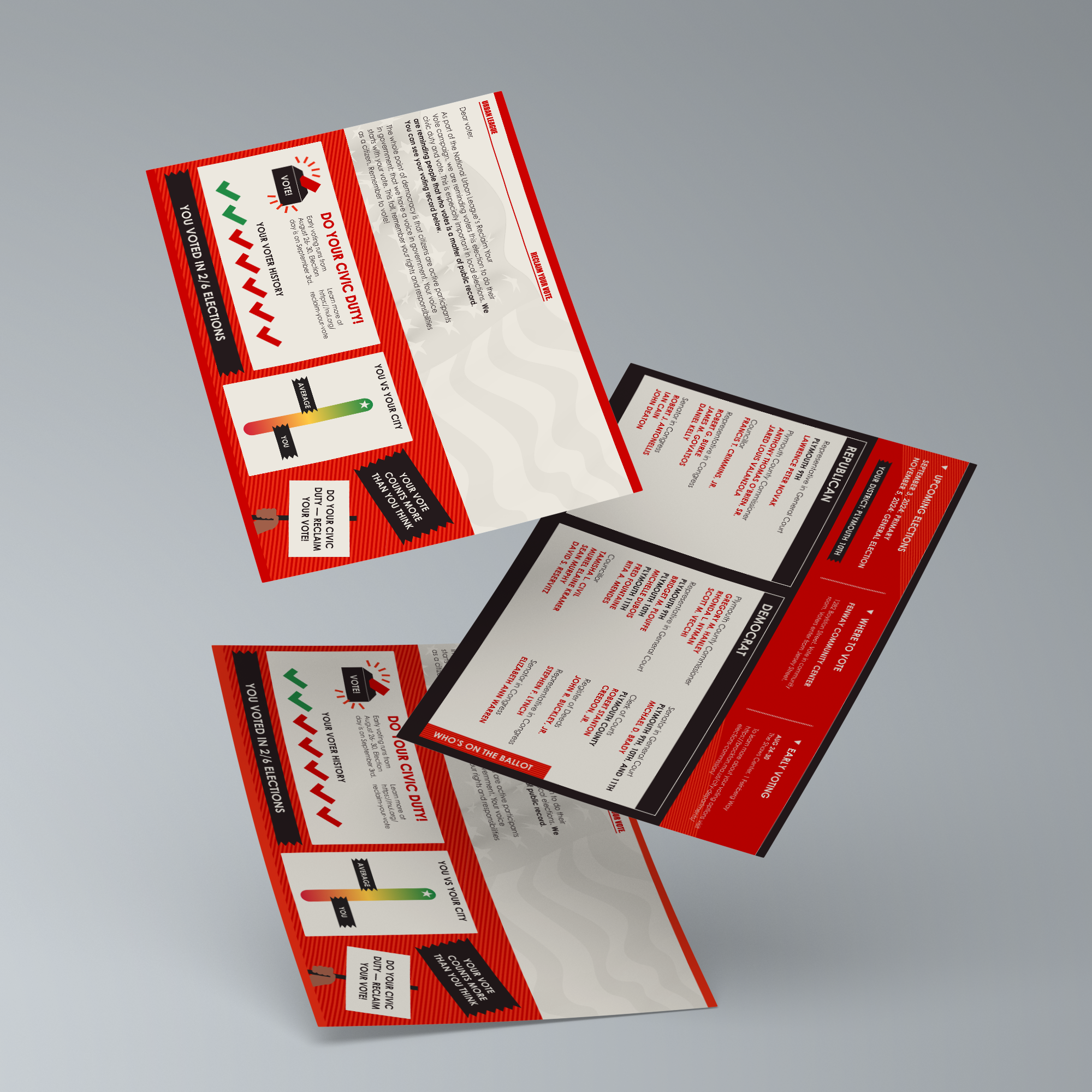
After the success of the Boston Voter Hub, I was brought onto an initiative for the Urban League of Massachusetts to execute data analysis, design, and psychology aimed at increasing voter turnout through customized and design-forward mailers. Our team analyzed census data, which I then combined with the user research from the Boston Voter initiative and constant collaboration with BU psychology professors to design and generate personal mailers for a select group of boston citizens. We had a group of 10,000 citizens and sent out 5,000 mailers to eventually compare impact.
Final Thoughts
Both projects are still ongoing, and very close to my heart. Through engaging in true community-centered research honored by thoughtful and curiosity-led interdisciplinary thinking, you really begin to get to the bottom of what people truly need and what it takes to execute, but it's not always flashy. Good design is humble, flexible, and most importantly, high impact.